Q: Instead of GO VEG should we be saying GO HUMANE?
The world will never be totally vegetarian so why not rally meat eaters to be more concerned with where their meat comes from and what kind of inhumane conditions the animals live in? If we can't change the meat eaters, why cant we change the animal raisers?
A: If you tell people that all they have to do is buy happy meat ("humanly" killed dead animals) that's all they will do, at most.
However I like many other people believe that non-human animals do not deserve to be the property of humans. Or if you prefer, we have the responsibility to treat sentient beings (animals capable of awareness, which is the vast majority of them by the way.) in a way that respects their interests in not being treated as property. To properly respect this interest one must be vegan. Indeed veganism must be the moral baseline of the animal rights movement if this movement is to mean anything. *key point* If animal rights means dead animals, animal rights means nothing.
No matter how "nicely" an animal is treated before he or she goes to slaughter they all go to the same slaughterhouse. All food animals, "happy meat approved", or conventionally produced end up in the same condition, dead.
Simply put, if you take animal interests seriously you become vegan and you respect those interests. Killing animals, no matter how "nicely" is not respecting their interest in continued existence. The campaigning you speak of is the business of meat eaters. Vegans such as myself will stick to reducing demand by creating more vegans.
Showing posts with label Aboliton. Show all posts
Showing posts with label Aboliton. Show all posts
Friday, June 22, 2007


Thursday, May 31, 2007
Lets get tough on activism!
(Contains some non-PG material :D)
The importance of good, effective, vegan activism and outreach cannot be overstated. In some way, I’m sure it’s responsible for you becoming a vegan or considering becoming one now. I would like to address a specific part of effective activism, the part I would consider the most important, talking to people about veganism. Obviously, we can’t do very effective outreach if we don’t engage in a dialog about our veganism with our non-vegan acquaintances. However, many people much to my surprise, are very uncomfortable talking about their veganism to the point that they deem any day to day outreach efforts as evangelizing and imposing our collective vegan will on others.
One of the most frustrating aspects of this anti personal outreach trend is this demented live and let live attitude that comes along with it. “I don’t care what other people eat; they can do what they want.” Seriously!? If you really believe that then why the fuck are you a vegan in the first place? You might as well just keep eating animals at that point since you seem to have no problem with animal consumption. Lets face it, you alone don’t make that big of a difference to the animals as a vegan if you do nothing but try and hide your veganism every chance you get. It’s when we help other people to go vegan that we really become useful to the real animal rights movement, ourselves, others, and the animals.
Now I’m not saying we should go around punching everyone in the face that eats a turkey sandwich (although that might be effective outreach too :D). What I am saying is that it is vitally important that when the topic comes up you do engage in a conversation about veganism. You don’t necessarily have to make a compelling case for abolitionist theory the first time you talk to someone, but strive to drive home main points such as: animals should not be used by people for any reason, there is no morally relevant distinction between using animals and using humans, and if you take animal interests seriously you must be vegan.
I strongly recommend visiting Professor Gary Francione’s website to learn more about abolitionist animal rights. It’s always much easier and fun to talk to someone about something you are familiar with and veganism is no different.
In conclusion try to talk to everyone you can about veganism, make it a goal to talking to at least one person a day about it. Start slow, just make sure you don’t make concessions in your argument to makes the conversation more pleasant. Other people may not agree with you and that’s fine, but for veganism to mean anything it must be a moral baseline, it must be nonnegotiable. Now get out there and talk to people!
The importance of good, effective, vegan activism and outreach cannot be overstated. In some way, I’m sure it’s responsible for you becoming a vegan or considering becoming one now. I would like to address a specific part of effective activism, the part I would consider the most important, talking to people about veganism. Obviously, we can’t do very effective outreach if we don’t engage in a dialog about our veganism with our non-vegan acquaintances. However, many people much to my surprise, are very uncomfortable talking about their veganism to the point that they deem any day to day outreach efforts as evangelizing and imposing our collective vegan will on others.
One of the most frustrating aspects of this anti personal outreach trend is this demented live and let live attitude that comes along with it. “I don’t care what other people eat; they can do what they want.” Seriously!? If you really believe that then why the fuck are you a vegan in the first place? You might as well just keep eating animals at that point since you seem to have no problem with animal consumption. Lets face it, you alone don’t make that big of a difference to the animals as a vegan if you do nothing but try and hide your veganism every chance you get. It’s when we help other people to go vegan that we really become useful to the real animal rights movement, ourselves, others, and the animals.
Now I’m not saying we should go around punching everyone in the face that eats a turkey sandwich (although that might be effective outreach too :D). What I am saying is that it is vitally important that when the topic comes up you do engage in a conversation about veganism. You don’t necessarily have to make a compelling case for abolitionist theory the first time you talk to someone, but strive to drive home main points such as: animals should not be used by people for any reason, there is no morally relevant distinction between using animals and using humans, and if you take animal interests seriously you must be vegan.
I strongly recommend visiting Professor Gary Francione’s website to learn more about abolitionist animal rights. It’s always much easier and fun to talk to someone about something you are familiar with and veganism is no different.
In conclusion try to talk to everyone you can about veganism, make it a goal to talking to at least one person a day about it. Start slow, just make sure you don’t make concessions in your argument to makes the conversation more pleasant. Other people may not agree with you and that’s fine, but for veganism to mean anything it must be a moral baseline, it must be nonnegotiable. Now get out there and talk to people!
Wednesday, May 23, 2007
Vegetarians and Animal Rights
I’m sure we have all met the vegetarian that claims to support animal rights. Maybe you are that vegetarian and if so you might just be wondering where this is headed. If so, I ask that you merely wait to dismiss what I have to say until the end of this post.
(Vegetarians as I will speaking of it them here is meant to refer to people who do not eat animal bodies or slaughterhouse by-products, such as gelatin, but who do still consume eggs and dairy products and may wear wool.)
The vegetarian lifestyle as defined above is still participating in the exploitation of animals. By consuming dairy, you are still directly supporting the veal and leather industries. By consuming eggs, you are complicit in the killing of billions of “spent” hens yearly. The most important point to understand about the dairy and egg industries is that they rely on the eventual, untimely killing of the cows and chickens that are enslaved to them as much as meat producers do. it makes no difference whether the farm is organic or “free-range” or “humanely raised” with Whole Foods seal of approval, the process is the same. Therefore vegetarianism, wile still much better than eating animals, is inconsistent with basic animal rights theory as it violates the most basic right not to be treated as the property of others by requiring animals be enslaved and killed to bring said vegetarians milk and eggs.
For the rights of animals to mean anything even if just in theory at this point in time, the people who champion the cause cannot be living a lifestyle incompatible with rights theory. Would you take someone seriously who spoke of equality for men and women if you knew that person beat their wife? Why should anyone take a movement seriously that speaks of rights for animals, most importantly the right not to be treated as property, when some in the movement continue to exploit animals and are complicit in their use as property?
If you are already a vegetarian going vegan is a quite easy next step. Eliminating dairy and eggs is almost effortless if you take a week to research other food options to prepare to replace dishes you currently eat that contain eggs and dairy products.
If you take animal interests seriously, and I hope if you are reading this that you do, then I urge you to consider making the next step. Become Vegan.
-MH
(Vegetarians as I will speaking of it them here is meant to refer to people who do not eat animal bodies or slaughterhouse by-products, such as gelatin, but who do still consume eggs and dairy products and may wear wool.)
The vegetarian lifestyle as defined above is still participating in the exploitation of animals. By consuming dairy, you are still directly supporting the veal and leather industries. By consuming eggs, you are complicit in the killing of billions of “spent” hens yearly. The most important point to understand about the dairy and egg industries is that they rely on the eventual, untimely killing of the cows and chickens that are enslaved to them as much as meat producers do. it makes no difference whether the farm is organic or “free-range” or “humanely raised” with Whole Foods seal of approval, the process is the same. Therefore vegetarianism, wile still much better than eating animals, is inconsistent with basic animal rights theory as it violates the most basic right not to be treated as the property of others by requiring animals be enslaved and killed to bring said vegetarians milk and eggs.
For the rights of animals to mean anything even if just in theory at this point in time, the people who champion the cause cannot be living a lifestyle incompatible with rights theory. Would you take someone seriously who spoke of equality for men and women if you knew that person beat their wife? Why should anyone take a movement seriously that speaks of rights for animals, most importantly the right not to be treated as property, when some in the movement continue to exploit animals and are complicit in their use as property?
If you are already a vegetarian going vegan is a quite easy next step. Eliminating dairy and eggs is almost effortless if you take a week to research other food options to prepare to replace dishes you currently eat that contain eggs and dairy products.
If you take animal interests seriously, and I hope if you are reading this that you do, then I urge you to consider making the next step. Become Vegan.
-MH
Wednesday, May 2, 2007
Happy Meat!
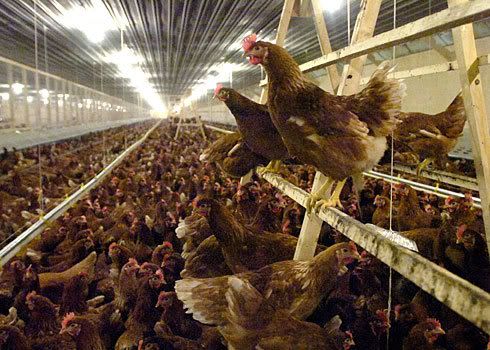
The above term is one of my favorite circulating in the abolitionist animal rights movement currently. These two simple words illustrate much of what is wrong with the new-welfarist approach to animal rights, at once describing activist policy and public perception.
The public views Happy Meat (humanely raised, free range, etc.) as a morally superior choice to non-humanly produced meat, or rather a morally superior choice to meat that is not marketed as humanely produced. When it comes right down to it the real difference is in the labeling. The suffering the animals experience sure doesn’t change much with free range production, and humanly raised animals are still killed. The public’s perception of happy meat and the so-called animal “protectionists” that peddle it as morally superior is that they are doing something good for the animals. More importantly the consumers feel their choice to eat “happy meat” is sufficient. I can’t tell you how many people I have talked to that say “well I only eat free range, isn’t that ok?” The more informed ones might even bring up the fact that animal “protection” groups endorse and fight for humanely raised products, assuming a seal of approval from these groups. The fact that some deny the incredibly negative impact this sort of campaigning has on public perception and more importantly; the number of animal lives lost is astounding. Maybe I live in some backwards bubble unaffected by the rest of the world (and somehow judging from the stories of others I doubt it) but where I live people that are uncomfortable with eating regular animal products are just fine with eating free range animals. I call them Whole Foods customers, but whatever terminology you like is fine too. We are effectively taking people who may have went vegan given some encouragement, and delayed their growth by making them complacent with a “kinder, gentler” form of exploitation. This is also quite a poor move from an activist standpoint because it causes us to spend money campaigning to get people to eat happy meat, and then we must engage these same people again to try to get them to go vegan. The money and time wasted getting people, companies, university cafeterias, and the like to adopt free-range options would be much better spent getting people and establishments to adopt vegan lifestyles and offer vegan options.
Of course as an abolitionist, I would love to see a real focus on vegan abolitionist education campaigns on a large scale. I feel we give the public too little credit for their ability to change their perceptions sometimes. Maybe I’m mistaken, but if people understood the life’s of the animals they ate and the effect their choices really have, I think they would be less likely to continue their current habits. By peddling happy meat as animal protectionists do, we abandon the very animals we claim we are fighting to protect, and retard the growth of a strong coherent vegan movement.
The public views Happy Meat (humanely raised, free range, etc.) as a morally superior choice to non-humanly produced meat, or rather a morally superior choice to meat that is not marketed as humanely produced. When it comes right down to it the real difference is in the labeling. The suffering the animals experience sure doesn’t change much with free range production, and humanly raised animals are still killed. The public’s perception of happy meat and the so-called animal “protectionists” that peddle it as morally superior is that they are doing something good for the animals. More importantly the consumers feel their choice to eat “happy meat” is sufficient. I can’t tell you how many people I have talked to that say “well I only eat free range, isn’t that ok?” The more informed ones might even bring up the fact that animal “protection” groups endorse and fight for humanely raised products, assuming a seal of approval from these groups. The fact that some deny the incredibly negative impact this sort of campaigning has on public perception and more importantly; the number of animal lives lost is astounding. Maybe I live in some backwards bubble unaffected by the rest of the world (and somehow judging from the stories of others I doubt it) but where I live people that are uncomfortable with eating regular animal products are just fine with eating free range animals. I call them Whole Foods customers, but whatever terminology you like is fine too. We are effectively taking people who may have went vegan given some encouragement, and delayed their growth by making them complacent with a “kinder, gentler” form of exploitation. This is also quite a poor move from an activist standpoint because it causes us to spend money campaigning to get people to eat happy meat, and then we must engage these same people again to try to get them to go vegan. The money and time wasted getting people, companies, university cafeterias, and the like to adopt free-range options would be much better spent getting people and establishments to adopt vegan lifestyles and offer vegan options.
Of course as an abolitionist, I would love to see a real focus on vegan abolitionist education campaigns on a large scale. I feel we give the public too little credit for their ability to change their perceptions sometimes. Maybe I’m mistaken, but if people understood the life’s of the animals they ate and the effect their choices really have, I think they would be less likely to continue their current habits. By peddling happy meat as animal protectionists do, we abandon the very animals we claim we are fighting to protect, and retard the growth of a strong coherent vegan movement.
P.S. The image above is of a "free-range" egg facility. You can make your own judgements as to the appropriateness of this title.
Monday, April 30, 2007
More Questions and Answers
Question:
When someone asks you for a donation to support cancer research...?
Do you point out to them that the money they are collecting is being used to torture animals? Do you inform them that there are ethical and humane charities who are funding research into cancer and other medical conditions without harming animals? Or do you just donate without thinking?
Answer:
No, I just don't donate to groups that support animal testing. I've never been asked why and have never given a reason. I'm 100% opposed to animal testing so if I know the charity supports it I will not donate to them. Like it or not but prevention is still the best option we have when it comes to cancer .We must keep this in prospective, animal testing will not cure cancer. They have been testing on animals for close to 30 years now to find a cure for cancer and they are not a bit closer than they were 29 years ago in regards to their animal tests. The "improvements" in cancer treatment that have been made by western medicine have been made though human research. If you think it is wrong to eat animals how can you think it's ok to test on them? It's wrong of humans to use animals in any way just as it is wrong for humans to use other humans no matter the benefit.
When someone asks you for a donation to support cancer research...?
Do you point out to them that the money they are collecting is being used to torture animals? Do you inform them that there are ethical and humane charities who are funding research into cancer and other medical conditions without harming animals? Or do you just donate without thinking?
Answer:
No, I just don't donate to groups that support animal testing. I've never been asked why and have never given a reason. I'm 100% opposed to animal testing so if I know the charity supports it I will not donate to them. Like it or not but prevention is still the best option we have when it comes to cancer .We must keep this in prospective, animal testing will not cure cancer. They have been testing on animals for close to 30 years now to find a cure for cancer and they are not a bit closer than they were 29 years ago in regards to their animal tests. The "improvements" in cancer treatment that have been made by western medicine have been made though human research. If you think it is wrong to eat animals how can you think it's ok to test on them? It's wrong of humans to use animals in any way just as it is wrong for humans to use other humans no matter the benefit.
Wednesday, April 25, 2007
Quit lying to the kids!
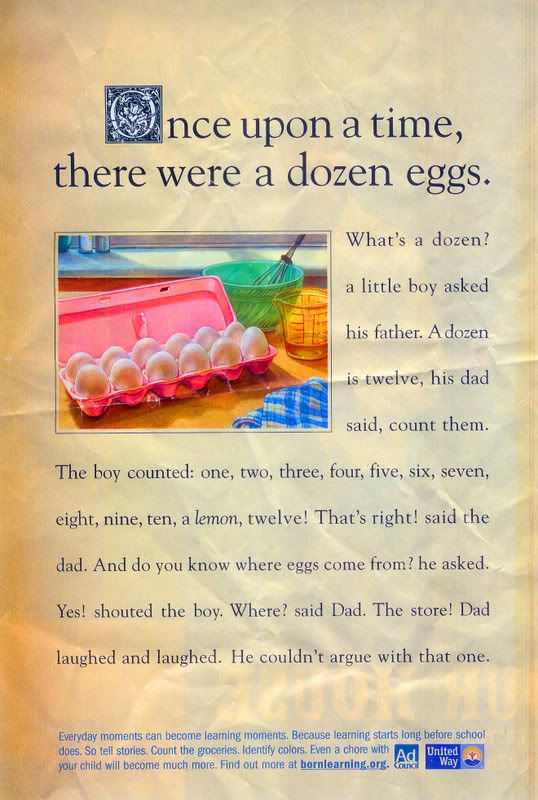 Did you know the “store” makes eggs? I sure didn’t. Why must we lie to our children about where our food comes from? A hen had to suffer in horrible conditions to produce those eggs that you so ignorantly agreed came from the store, and no, I don’t care if they were free range or “humanely raised” whatever that means. Anyone who cares to analyze the situation objectively will easily see that by resorting to lying to our children or telling them half-truths about where their food comes from we tell the world that the truth is too horrendous for a child to take. I understand the need for keeping concepts at age appropriate levels. Depicting cow slaughter to a child under ten years old most likely would be a bad idea for example. I do think however, that an age appropriate explanation of where the slab of flesh on said child’s plate comes from is important. For that matter I think an explanation of where Nikes come from is important as well, but that’s a different topic.
 The problem is (for the exploiters anyways) is that kids get this stuff. They haven’t had the years of cognitive dissonance to be able to shrug off the truth like some adults can. No, when our children are told the truth they see things such as this for what they really are, atrocities of the highest scale. That’s why we are scared to tell them because they, unlike many of us, will put two and two together and realize that the animal you just told them about, a being that they understand to be an individual with the ability to suffer, is nothing but a distant relative of the animal that was killed to feed them.
The world can’t have honesty when it comes to food production. If we told our children, what really happens many more people would grow up Vegan today. We all know the saying that goes “if slaughterhouses had glass walls more people would be Vegan.” Well I bet if more people were honest about where our food comes from at a young age, more people would be Vegan too.
-Matt Hastings
Wednesday, April 18, 2007
How humanely raised do you feel now?
This is a little "guided meditation" on the subject of humanely raised animals. I would like to write a longer one in the future and this is the rough draft of a first attempt. I would like to know what people think, what works for you, what doesn't.
What if I was to confine you for a year? You are well treated, you have food, water and a few things to do. All in all your treated pretty well. Then one day I come in scoop you up, bring you outside and throw you into a truck with a bunch of other people. You are scared now, somehow the past year of being pampered still doesn't make up for even this little bit of torment. The truck stops and you are roughly tossed onto the ground were you are told to form a line and follow the others in front of you. As you walk into this building single file people are waiting their turn to enter a door you can see up ahead. When it's your turn you walk in and are quickly strung up by your legs upside down. To add to the immense terror you already feel at this point, a man with blood stained clothes turns around and begins approaching you with a knife in his right hand. With an emotionless expression on his face he proceeds to sever your windpipe and the arteries of your neck despite your screams of protest. It’s like he didn’t even hear you. As your drown in your own blood, gasping for breath, I think we can both agree that right now it makes no difference how you were treated before you were cut open. You will still be dead in a moment, and you will die terrified and tortured.
What if I was to confine you for a year? You are well treated, you have food, water and a few things to do. All in all your treated pretty well. Then one day I come in scoop you up, bring you outside and throw you into a truck with a bunch of other people. You are scared now, somehow the past year of being pampered still doesn't make up for even this little bit of torment. The truck stops and you are roughly tossed onto the ground were you are told to form a line and follow the others in front of you. As you walk into this building single file people are waiting their turn to enter a door you can see up ahead. When it's your turn you walk in and are quickly strung up by your legs upside down. To add to the immense terror you already feel at this point, a man with blood stained clothes turns around and begins approaching you with a knife in his right hand. With an emotionless expression on his face he proceeds to sever your windpipe and the arteries of your neck despite your screams of protest. It’s like he didn’t even hear you. As your drown in your own blood, gasping for breath, I think we can both agree that right now it makes no difference how you were treated before you were cut open. You will still be dead in a moment, and you will die terrified and tortured.
Thursday, April 12, 2007
Abolition and Massage- an Animal Exploiter’s Worst Nightmare
We all know that massage therapy is great for relaxation, relieving soreness and muscle tension, and a great number of other things. But did you know it could help make you a better animal advocate?
One thing that all people who spend time focused on others, human or nonhuman, have in common is they consistently neglect themselves. It’s easy to do. With everything we have going on in our lives the idea of stopping for a little me time can even seem selfish, but taking time out for you is essential to your ability to continue to help others for many years to come.
As animal advocates and especially as abolitionist’s we suffer from a great deal of stress in our pursuit to help animals. After a wile, this stress accumulates and many people become overwhelmed. This leads to the high burnout rate that the animal rights community experiences. To combat this high burnout rate I suggest groups of activists seek out Massage therapists they feel comfortable with, or alternative stress relieving activities.
Incorporating a therapist into your activist community could be as easy as inviting them to do 10 min chair massages at your next potluck for a fee you agree upon. You could even work out a group discount that everyone receives if a certain number of people book a treatment. Look within your community first, you might just have a Vegan massage therapist in your ranks already. A few things to keep in mind when talking about prices is the same rules for tattoos pretty much apply here. Haggling is never a good idea, but trades are normally welcome by all, such as free advertising or something similar.
Combating burnout is something that urgently needs to be addressed. By implementing some of the suggestions above, I hope activists can keep “making Vegans” for many years to come.
-Matt Hastings
P.S. Since my girlfriend and I are interested in working within activist communities in the ways described above when we move to Chicago, please let me know how it’s going if anyone tries this. Thanks!
One thing that all people who spend time focused on others, human or nonhuman, have in common is they consistently neglect themselves. It’s easy to do. With everything we have going on in our lives the idea of stopping for a little me time can even seem selfish, but taking time out for you is essential to your ability to continue to help others for many years to come.
As animal advocates and especially as abolitionist’s we suffer from a great deal of stress in our pursuit to help animals. After a wile, this stress accumulates and many people become overwhelmed. This leads to the high burnout rate that the animal rights community experiences. To combat this high burnout rate I suggest groups of activists seek out Massage therapists they feel comfortable with, or alternative stress relieving activities.
Incorporating a therapist into your activist community could be as easy as inviting them to do 10 min chair massages at your next potluck for a fee you agree upon. You could even work out a group discount that everyone receives if a certain number of people book a treatment. Look within your community first, you might just have a Vegan massage therapist in your ranks already. A few things to keep in mind when talking about prices is the same rules for tattoos pretty much apply here. Haggling is never a good idea, but trades are normally welcome by all, such as free advertising or something similar.
Combating burnout is something that urgently needs to be addressed. By implementing some of the suggestions above, I hope activists can keep “making Vegans” for many years to come.
-Matt Hastings
P.S. Since my girlfriend and I are interested in working within activist communities in the ways described above when we move to Chicago, please let me know how it’s going if anyone tries this. Thanks!
Saturday, April 7, 2007
Yahoo! Answers and Vegan outreach, a call to “arms”
I spend a good bit of time in the Vegetarian & Vegan section of Yahoo! Answers posting under the username MattH. The questions and answers you will see here range from well thought out and respectful, to downright nasty. Since I’ve been answering questions there for a wile my posts and views have become quite well known. When I first started posting here many people were hostile to my views. Even so, I spoke my truth and defended abolitionist animal rights.
Recently though, a small but noticeable shift has been occurring on Yahoo! Answers. Topics I use to get thumbs down for, recently have been gaining support from other users. My views have not changed, if anything they have grown stronger in favor of the abolitionist approach as set forth by Gary Francione. It seems to me people have started to open up to considering the abolitionist theory in this forum.
My purpose for posting such a mundane topic is simple. I would love to see more people advocating abolitionist animal rights and Veganism on Yahoo! Answers. Post questions to get people thinking, or answer other users questions. Currently we have two people who are unequivocally supporting abolitionist theory, another Vegan Freak listener, and myself. I could not imagine the impact it may have if that number jumped to even ten people, or twenty. Please consider posting on Yahoo! Answers no matter how infrequently as a small addition to your Vegan outreach.
-Matt Hastings
Recently though, a small but noticeable shift has been occurring on Yahoo! Answers. Topics I use to get thumbs down for, recently have been gaining support from other users. My views have not changed, if anything they have grown stronger in favor of the abolitionist approach as set forth by Gary Francione. It seems to me people have started to open up to considering the abolitionist theory in this forum.
My purpose for posting such a mundane topic is simple. I would love to see more people advocating abolitionist animal rights and Veganism on Yahoo! Answers. Post questions to get people thinking, or answer other users questions. Currently we have two people who are unequivocally supporting abolitionist theory, another Vegan Freak listener, and myself. I could not imagine the impact it may have if that number jumped to even ten people, or twenty. Please consider posting on Yahoo! Answers no matter how infrequently as a small addition to your Vegan outreach.
-Matt Hastings
Subscribe to:
Posts (Atom)

